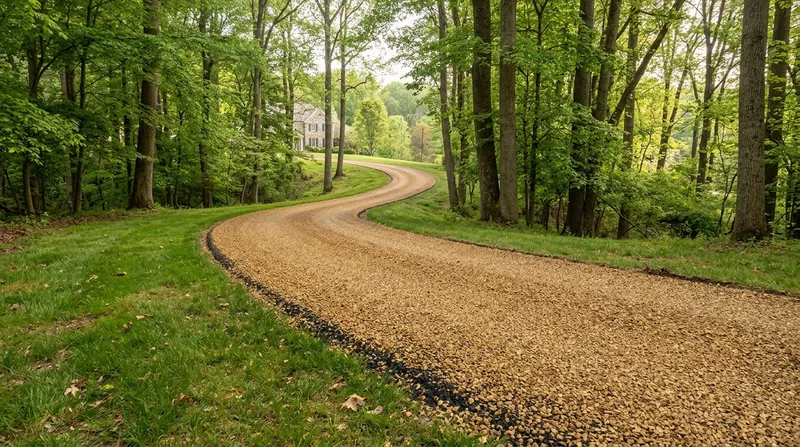




Tar and chip driveways in Wilmington offer a textured, low-cost alternative to hot-mix asphalt, especially well-suited to the long rural and suburban drives that run through Brandywine Valley estates, Hockessin horse properties, and the newer subdivisions spreading across Bear, Glasgow, and Middletown. The Piedmont soils and freeze-thaw cycles that dominate the northern Wilmington landscape make spring and fall the critical maintenance windows, and tar and chip surfaces handle winter traction naturally without the brittleness that hot-mix develops in our freeze-thaw zone. This liquid-asphalt-and-stone finish costs less than full-depth paving and delivers the classic country look that fits the character of older estates and rural properties across New Castle County. We install new tar and chip drives and maintain existing oil-and-stone surfaces with regular re-chipping to extend their life. Whether you are protecting a long private drive near Greenville, refreshing a rural lane in Pike Creek, or maintaining an established surface in the Brandywine Hundred, tar and chip is a practical choice when budget and aesthetics both matter.
Why Tar and Chip Driveways Make Sense in Wilmington's Piedmont and Coastal-Plain Mix
Wilmington sits at the fall line where rocky Piedmont soils meet the sandy coastal plain, and that geography shapes how driveways age. The northern suburbs and rural estates around Greenville, Hockessin, and Brandywine Village sit on hard gneiss with shallow stone, while the newer subdivisions in Bear, Glasgow, and Middletown spread across clay and silt that hold water after the 45 inches of annual rain and nor'easters that soak the region. Freeze-thaw cycles from December through March crack and pothole hot-mix asphalt in both zones, and road salt accelerates the damage. Tar and chip avoids some of that brittleness because the stone chips give traction and the liquid binder remains more flexible in cold than a rigid hot-mix surface. The material is also more forgiving of poor base drainage, which matters on older properties where culverts and grading may not meet modern standards. For long private drives, rural lanes, and estate properties where appearance and budget are both concerns, tar and chip is a time-tested choice.
- Tar and chip costs less per square foot than hot-mix asphalt paving, making it practical for longer rural and suburban driveways.
- The textured stone surface provides natural traction in snow and ice without the glare of smooth hot-mix in winter sunlight.
- The liquid binder flexes more readily in freeze-thaw cycles, reducing the cracking and potholing that plagues rigid pavements in Wilmington winters.
- We maintain and re-chip existing oil-and-stone surfaces to extend their life and refresh the appearance without full replacement.
- The country aesthetic fits estate properties, horse farms, and rural lanes across the Brandywine Valley and northern New Castle County.
These factors make tar and chip the practical choice for Wilmington homeowners and property managers who need durability and value on long or rural drives.
Wilmington context: Properties in Greenville, Hockessin, and around Brandywine Village often carry long private drives that wind through old beech and tulip poplar groves. Tar and chip surfaces age well on these rural lanes because they shed water naturally and avoid the thermal cracking that develops on rigid hot-mix in our freeze-thaw zone. A 200-foot drive that might cost $4,000 to $6,000 in hot-mix paving can often be built in tar and chip for $2,500 to $4,000, making the material a genuine budget lever for estate and rural properties.
For detailed permitting and local requirements, check with your municipality or HOA, as rules vary across Greater Wilmington. The Delaware Department of Natural Resources and Environmental Control publishes stormwater and surface-water guidance that may affect drive design or extension in your jurisdiction.
How We Install and Maintain Tar and Chip Driveways in Wilmington
Tar and chip installation begins with base preparation and grading to ensure water sheds away from structures and to the shoulders or drainage swales. We proof-roll the base to confirm it is firm and stable, then apply a tack coat of liquid asphalt over the prepared surface. Stone chips, typically 3/8-inch to 1/2-inch aggregate, are spread and rolled into the liquid binder to create a textured, well-bound surface. The process is straightforward and faster than hot-mix paving because there is no need for heavy paving equipment or long cure times. On existing tar and chip surfaces that have worn thin or lost surface cohesion, we clean the drive, apply a fresh tack coat, and spread new stone chips rolled into place, effectively re-chipping the surface to restore traction and appearance. This maintenance work extends the life of an established drive and costs far less than full replacement.
- We measure the drive and assess the base condition, drainage, and any soft spots or erosion that need correction before paving.
- We prepare and grade the base to slope away from buildings and toward drainage swales or shoulders, and proof-roll to confirm firmness.
- We apply a tack coat of liquid asphalt over the prepared base to bond the stone chips.
- We spread and roll stone chips into the liquid binder, building a compacted, textured surface with natural traction.
- The drive is ready for light traffic within 24 to 48 hours, though full cure and hardening continue over the next few weeks.
- For maintenance re-chipping, we clean the existing surface, apply tack, and roll new stone into place to refresh traction and extend life.
This step-by-step process ensures a stable, well-drained, and durable tar and chip surface that handles Wilmington weather and the heavy freeze-thaw cycles of our winter season.
Local example: A 150-foot rural drive in Pike Creek with a soft clay base and poor drainage required grading and base reinforcement before tar and chip paving. We sloped the drive toward a new swale on the south side, compacted the base with a vibratory roller, and applied tar and chip in two lifts to ensure good stone retention and traction. The finished surface sheds water naturally and has held up well through two winters of freeze-thaw and road salt exposure. Maintenance re-chipping every 3 to 4 years keeps the surface tight and safe.
Learn more about base preparation and drainage for driveway grading and site work, which are foundational to any tar and chip installation.
Tar and Chip Methods and Approaches
| Approach | Description | Best for |
|---|---|---|
| New tar and chip installation | Full base prep, grading, tack coat, and rolled stone chips on prepared subgrade or recycled asphalt base. | New driveways, rural lanes, long estate drives, and properties where budget and country appearance matter. |
| Tar and chip overlay on existing asphalt | Tack coat applied over sound hot-mix, then stone chips rolled into place to create a new textured surface. | Older hot-mix driveways in good structural condition that need refreshed appearance and improved traction. |
| Re-chipping and maintenance | Clean existing tar and chip surface, apply fresh tack coat, spread and roll new stone chips to restore traction and cohesion. | Established tar and chip driveways that have worn thin or lost surface binding; extends life 3 to 5 years. |
| Tar and chip with recycled asphalt base | Recycled asphalt millings compacted as base, then tar and chip surface applied on top for a fully recycled, lower-cost drive. | Budget-conscious rural properties, long drives, and landowners interested in recycled materials and lower upfront cost. |
Tar and Chip Driveways Cost in Wilmington: What to Expect
Tar and chip driveways in Wilmington typically cost starting at $5 per square foot for new installation on a prepared base, though the final price depends on several site-specific factors. Drive length, width, base condition, grading and drainage work, and access for equipment all affect the cost. A 200-foot by 12-foot rural drive (2,400 square feet) might run $12,000 to $15,000 installed, while a shorter 100-foot driveway in a more accessible location could fall to $6,000 to $8,000. Existing tar and chip surfaces that need re-chipping cost less, typically $2 to $3 per square foot, because no base work is required. The best way to know the true cost for your property is to get an on-site estimate, where we measure the drive, assess drainage and base condition, and give you a firm number with tonnage and material specifications included.
Several factors move the price up or down from the starting point. A drive with poor drainage or soft clay base will need grading, compaction, and possibly recycled asphalt base reinforcement, which adds cost. Longer drives and those requiring culvert work or site prep cost more than short, straightforward installs. Access for our equipment, proximity to structures, and site layout all matter. Getting two or three estimates from local contractors is wise, because each property is different and an honest estimate reflects the actual site conditions and the work required. We provide written estimates with tonnage and material specs so you know exactly what you are paying for, and we can explain how each factor affects the final cost.
For a detailed pricing overview across all our services and to understand how different job sizes and conditions affect cost, visit our full pricing page. When you are ready to discuss your specific drive and get a free estimate, call us at (302) 397-3315 or request a free estimate online and we will respond within 24 hours.
Tar and Chip Driveways Near Me: What Wilmington Homeowners Should Know When Hiring a Contractor
Hiring the right paving contractor for your tar and chip driveway is one of the most important decisions you will make on this project. The paving trade has a long history of door-to-door solicitation and unsolicited offers of "leftover asphalt from a nearby job," which is a classic red flag. A legitimate local contractor has a verifiable address in Wilmington or the surrounding towns, local phone service, and a reputation built on repeat business and referrals from property owners who have worked with them before. When you call, ask how long they have been in business, request references from recent projects, and ask to see examples of their work. Request a written estimate with tonnage, material specifications, and a detailed scope of work so you know what you are paying for and what the contractor has committed to deliver.
Several key factors matter when you evaluate any contractor for tar and chip or asphalt paving work. First, confirm that the contractor is fully insured and ask to see a current certificate of insurance. Second, ask whether the contractor will help you navigate local permitting, because driveway extensions, culverts, and curb cuts require approval in many Wilmington municipalities, and HOA rules often govern driveway materials and changes in master-planned communities. Third, ask whether the estimate includes a thickness specification and tonnage calculation, because these numbers show the contractor understands the job and can deliver a durable surface. Finally, ask about the timeline and the cure time before you can drive on the finished surface. Reputable contractors will be transparent about all of these points and will answer your questions directly without pressure to sign or pay a large deposit upfront.
- Verify that any contractor you hire is fully insured and ask to see a current certificate of insurance covering liability and property damage.
- Ask for at least two or three references from recent tar and chip or asphalt projects in Wilmington or nearby towns, and follow up with those references.
- Request a written estimate that includes material specifications, tonnage, drive dimensions, and a detailed scope of work so there are no surprises.
- Confirm that the contractor understands local permitting requirements and will help you navigate approvals if your project requires them.
- Ask whether the contractor has experience with your specific property type, whether rural estate, suburban subdivision, or HOA-governed community.
- Be wary of any contractor who solicits work door-to-door, demands a large cash deposit upfront, or quotes a price with no measurement or site visit.
These steps will help you find a contractor you can trust and avoid the common pitfalls that plague paving projects across Greater Wilmington.
When you are ready to move forward, contact us for a free, no-obligation estimate. We have served Wilmington and New Castle County since 2011, and we are fully insured and equipped to handle tar and chip installation and maintenance on drives of any size. Call (302) 397-3315 to schedule an on-site visit, or request an estimate online and we will respond within 24 hours.
Tar & Chip Driveways in Wilmington: Pricing Guide
| Service | Price | Details |
|---|---|---|
| New tar and chip driveway installation | Starting at $5/sq ft | Includes base prep, grading, tack coat, and rolled stone chips; cost rises with poor drainage, soft clay base, or grading work |
| Tar and chip overlay on existing asphalt | Starting at $3/sq ft | Tack coat and stone chips over sound hot-mix surface; requires existing pavement to be structurally intact and well-drained |
| Re-chipping and maintenance on established tar and chip | Starting at $2.50/sq ft | Clean surface, fresh tack coat, and new stone chips; extends life 3 to 5 years without full replacement or base work |
| Tar and chip with recycled asphalt base | Starting at $4/sq ft | Recycled asphalt millings compacted as base layer, tar and chip surface applied; lower cost and environmentally conscious choice |
| Travel and site work | Included | No separate mileage fee or call-out charge for Wilmington and surrounding service areas; grading and drainage assessment at estimate |
| Free estimate | No charge | On-site measurement and assessment with written estimate including tonnage and material specs; response within 24 hours at (302) 397-3315 |
Indicative pricing, the exact cost depends on square footage, finish, and site access. Free personalized estimate within 24h at (302) 397-3315.


